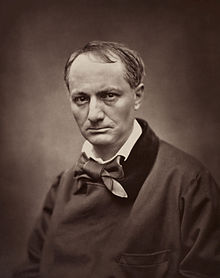
Baudelaire's "Ein Stück Aas": A Macabre Reflection on Life and Decay
Charles Baudelaire, a titan of French literature, stands as a pivotal figure in the evolution of European literary modernism. His profound influence stemmed not only from his revolutionary poetic style but also from his unwavering commitment to exploring the darker, often uncomfortable, facets of existence. His work, particularly masterpieces like "Ein Stück Aas" (A Carcass), serves as a testament to the power of artistic will and discipline. Indeed, as Baudelaire himself exemplified,
Baudelaire Eine Folge Von Kleinen Willensakten – a series of small acts of will – delivers significant results, a philosophy evident in the meticulously crafted, yet deeply disturbing, landscapes of his poetry. This principle of persistent effort and intentional creation allowed him to challenge societal norms and redefine beauty, even within the grotesque.
The Unflinching Gaze: "Ein Stück Aas" and its Provocative Power
"Ein Stück Aas," one of the most controversial and iconic poems from Baudelaire's seminal collection *Les Fleurs du Mal* (The Flowers of Evil), invites readers into a confrontation with ultimate mortality. The poem begins deceptively, setting a scene of pastoral beauty: a summer morning, a couple walking in nature. Yet, this idyllic image is abruptly shattered by the discovery of a decaying animal carcass. What follows is a graphic, almost clinical, description of decomposition, rendered with Baudelaire's characteristic precision and unflinching gaze.
The imagery is visceral and unforgettable:
- The carcass described "lying like a wanton woman," legs spread, emitting "poisonous sweat."
- Flies buzzing, larvae teeming, creating a repulsive yet strangely vibrant scene of life feeding on death.
- The body seems to breathe, to pulse, almost as if transforming into new forms of existence, creating a "strange music" reminiscent of wind and water.
Baudelaire doesn't merely present a decaying object; he forces the reader to acknowledge the inherent, often overlooked, beauty in this grotesque transformation. The sun, instead of purifying, seems to "cook the putrefaction," accelerating the process. The heavens observe this "magnificent skeleton" blooming like a flower. This juxtaposition of the beautiful and the repulsive is a hallmark of Baudelaire's aesthetic, challenging the reader's preconceived notions of what constitutes art and beauty. The stench is so profound it almost causes the observer to faint, yet the poet insists on witnessing every detail. This deliberate confrontation with the repellent is a profound act of artistic will, demonstrating how
Baudelaire's Wisdom: How Small Acts of Will Lead to Greatness manifested in his artistic choices.
Baudelaire's Artistic Discipline: A Symphony of Small Acts of Will
The creation of a poem like "Ein Stück Aas" is not an accident; it is the product of intense intellectual and creative discipline. This brings us back to the core principle:
Baudelaire Eine Folge Von Kleinen Willensakten liefert ein bedeutendes Ergebnis. Baudelaire's entire career was built upon a succession of deliberate choices: to reject conventional romanticism, to seek beauty in squalor, to meticulously craft each line, and to provoke his audience into deeper thought.
His "small acts of will" included:
- Unwavering Observation: The poem's detailed descriptions suggest an almost scientific observation of decay, far removed from sentimentalism. This required a conscious decision to look closely at what others would avert their eyes from.
- Mastery of Form: Despite the shocking content, "Ein Stück Aas" is crafted with classical precision, using traditional meter and rhyme schemes. This control over form, even when dealing with chaotic subject matter, highlights his disciplined approach to poetry.
- Courage to Transgress: Publishing poems like "Ein Stück Aas" in the mid-19th century was a rebellious act, leading to legal prosecution. Baudelaire's will to present his unique vision, regardless of public condemnation, underscores his commitment to artistic freedom.
- Transformative Vision: He didn't just describe decay; he transformed it into a philosophical statement about life, death, and art. This act of intellectual alchemy required immense creative effort and persistent refinement of his ideas.
This relentless pursuit of artistic truth, even when it meant facing the ugly and the obscene, is the essence of Baudelaire's philosophy of willpower. Each carefully chosen word, each shocking image, each defiant theme was a "small act of will" that cumulatively led to the monumental impact of his work and solidified his position as
Charles Baudelaire: Unpacking the Architect of Modern French Poetry.
Beyond the Macabre: Finding Enduring Truth in Decay
The true genius of "Ein Stück Aas" lies not just in its graphic descriptions but in its profound philosophical implications. The poem takes a dramatic turn when Baudelaire directly addresses his beloved, predicting her eventual fate: she, too, will become a putrid carcass, devoured by worms. This jarring comparison serves as a stark reminder of the universality of death, dissolving all superficial distinctions of beauty and social status.
However, the poem doesn't end in nihilism. Baudelaire declares that he, the poet, will carry the "form and essence" of his love eternally within his art. This is a powerful assertion of art's immortality over the transience of physical existence. The decaying body, far from being just repulsive, becomes a muse, a source of inspiration for a lasting artistic creation.
Lessons from "Ein Stück Aas" for Modern Minds
Baudelaire's "Ein Stück Aas" offers enduring insights for anyone, not just artists:
*
Embrace Discomfort for Growth: The poem teaches us that true understanding often comes from confronting what makes us uncomfortable. Whether in art, personal development, or problem-solving, a willingness to look at the "carcass" – the ugly truth, the difficult challenge – can unlock deeper insights and creative solutions.
*
The Value of Observation: Baudelaire's meticulous detail in describing the carcass highlights the power of keen observation. By paying close attention to the world around us, even its unappealing aspects, we can uncover hidden patterns, beauty, and meaning.
*
Finding Unique Perspectives: Where others saw only decay, Baudelaire saw a complex ecosystem, a powerful metaphor for mortality, and a testament to art's enduring power. Cultivating such a unique perspective allows for innovation and originality in any field.
*
The Power of Persistence: Baudelaire's sustained effort in challenging conventions and perfecting his craft is a direct embodiment of
Baudelaire Eine Folge Von Kleinen Willensakten. Every significant achievement is the sum of countless deliberate, smaller efforts.
Conclusion
Charles Baudelaire's "Ein Stück Aas" remains a provocative and enduring work, challenging readers to look beyond superficial beauty and confront the inescapable realities of life and death. It is a poem that horrifies and fascinates in equal measure, transforming the grotesque into a profound meditation on existence, the nature of beauty, and the power of art. Through his unwavering poetic vision and his disciplined approach – a consistent "series of small acts of will" – Baudelaire not only crafted a masterpiece but also laid the groundwork for modern literature, proving that even from the most macabre subjects, timeless truth and beauty can emerge. His legacy is a powerful reminder that profound impact is often born from the courage to look unflinchingly at the world and the discipline to articulate what one sees with uncompromising honesty.